Did you know yesterday’s leftovers can support local farms, feed hungry people, and help build a more sustainable Michigan? Find out how during the Northern Michigan Compost Crawl, a weeklong series of nine free tours, demonstrations and hands-on experiences taking place September 14-18.
Organized by SEEDS and the Organic Waste Diversion Advisory Partnership (OWDAP), the Compost Crawl is part of the fifth annual Great Michigan Compost Tour. Hosted by the Michigan Organics Council, the statewide tour brings together farms, organizations and communities to showcase the many ways organic materials can be kept out of landfills and put to work across Michigan.
Northern Michigan residents are invited to go behind-the-scenes at 9 FREE EVENTS to explore how our region is turning yesterday’s leftovers into a healthier future. Explore the event schedule below and mark your calendar for a celebration of all things compost!
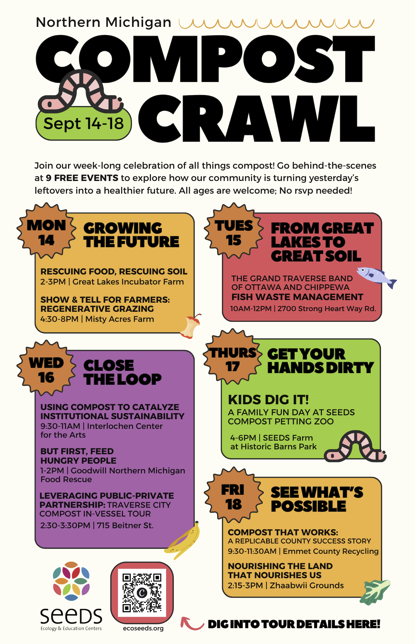
Northern Michigan Compost Crawl Schedule
Monday, September 14: Growing the Future
Explore regenerative & organic agriculture at local farms.
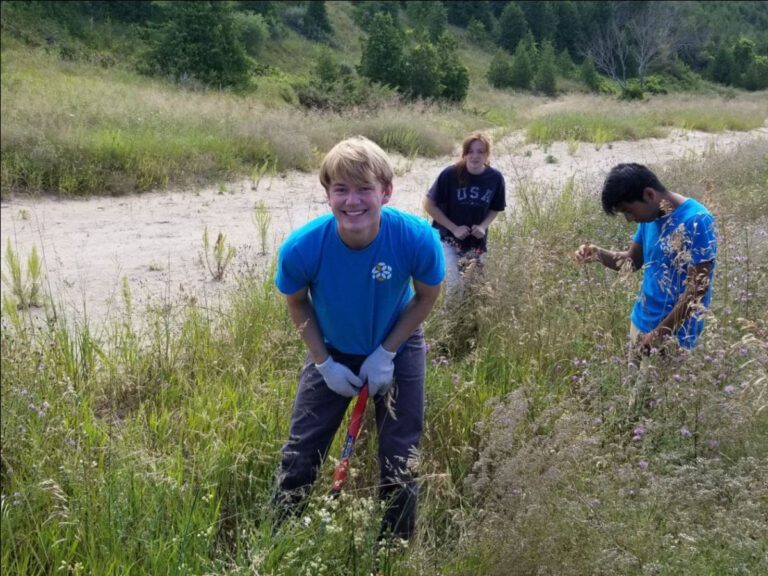
- Rescuing Food, Rescuing Soil with Great Lakes Incubator Farms (GLIF) with the Grand Traverse Conservation District (GTCD)
- “Show and Tell” Tour for Farmers: Cattle and Sheep Regenerative Grazing with Grand Traverse Regional Land Conservancy and Crosshatch
Tuesday, September 15: From Great Lakes to Great Soil
Discover how a fish out of water becomes a valuable soil resource.
- Grand Traverse Band of Ottawa and Chippewa Fish Waste Management with The Grand Traverse Band of Ottawa and Chippewa Gitigaan Agriculture & Food Sovereignty Department
Wednesday, September 16: Close the Loop
Experience three circular systems in action!
- Using Compost to Catalyze Institutional Sustainability Goals with Interlochen Center for the Arts
- But First, Feed Hungry People: A Look Into Food Rescue with GoodwillNMI Food Rescue
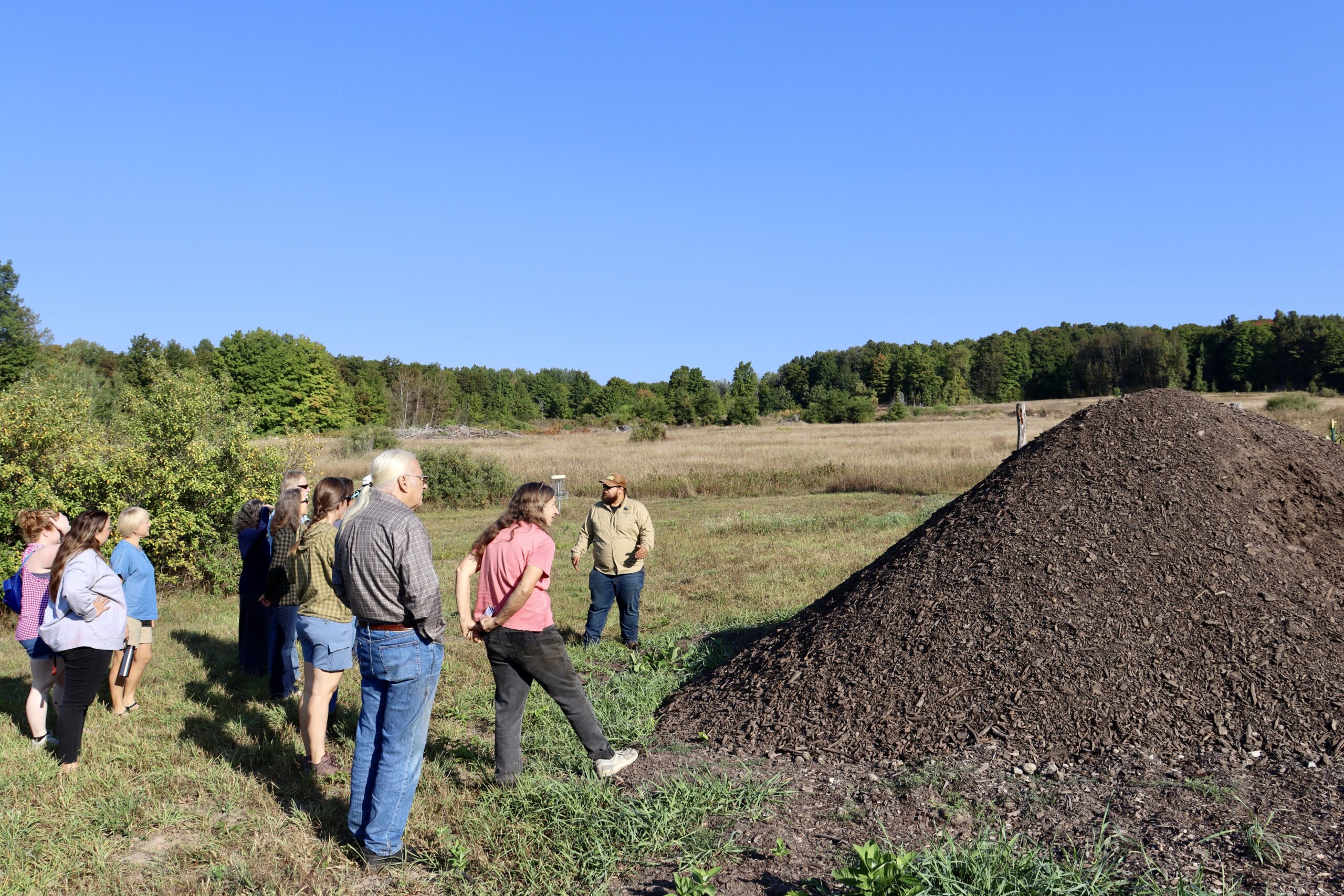
- Leveraging Public-Private Partnership: The Traverse City Compost In-Vessel Tour with City of Traverse City, Carter’s Compost, and SEEDS
Thursday, September 17: Get Your Hands Dirty
Pet the worms and meet the microbes making your soil.
- Kids Dig It! A Family Fun Day at the SEEDS Compost Petting Zoo with SEEDS Ecology & Education Centers
Friday, September 18: See What’s Possible
Explore community efforts turning ideas into impact.
- Compost That Works: A Replicable County Success Story with Emmet County Department of Public Works (Recycling & Waste)
- Nourishing the Land that Nourishes Us: A Tour of Zhaabwii Grounds with Zhaabwii Grounds
Why? Organic Waste is a Systemic Problem
Organic waste, any biodegradable material from plants or animals, is a major issue that affects the triple bottom line: people, planet, and profit.
- Planet: In Michigan alone, 38% of what we send to landfills is organic material like food, yard waste, wood and paper. When this waste breaks down in a landfill, it degrades anaerobically—it rots without oxygen— producing methane, a powerful greenhouse gas that contributes to climate change.
- People: More than 13% of Michiganders are experiencing food insecurity while close to 40% of food will be lost or wasted. Recovering and rescuing edible food, converting food waste into soil amendments to grow nutritious food, or using food scraps as animal feed, can help bridge that gap.
- Profit: Nationally, food waste costs each consumer an estimated $728 per year or $2,913 for a household of four. More money is lost via the resources—water, energy, labor, land use, and fertilizer—it took to grow that wasted food. These losses are compounded even further by an annual $40 billion loss in productivity due to depleted and eroded soil on our farmlands. Returning nutrients to depleted soils through a biologically building soil amendment like compost can significantly help.